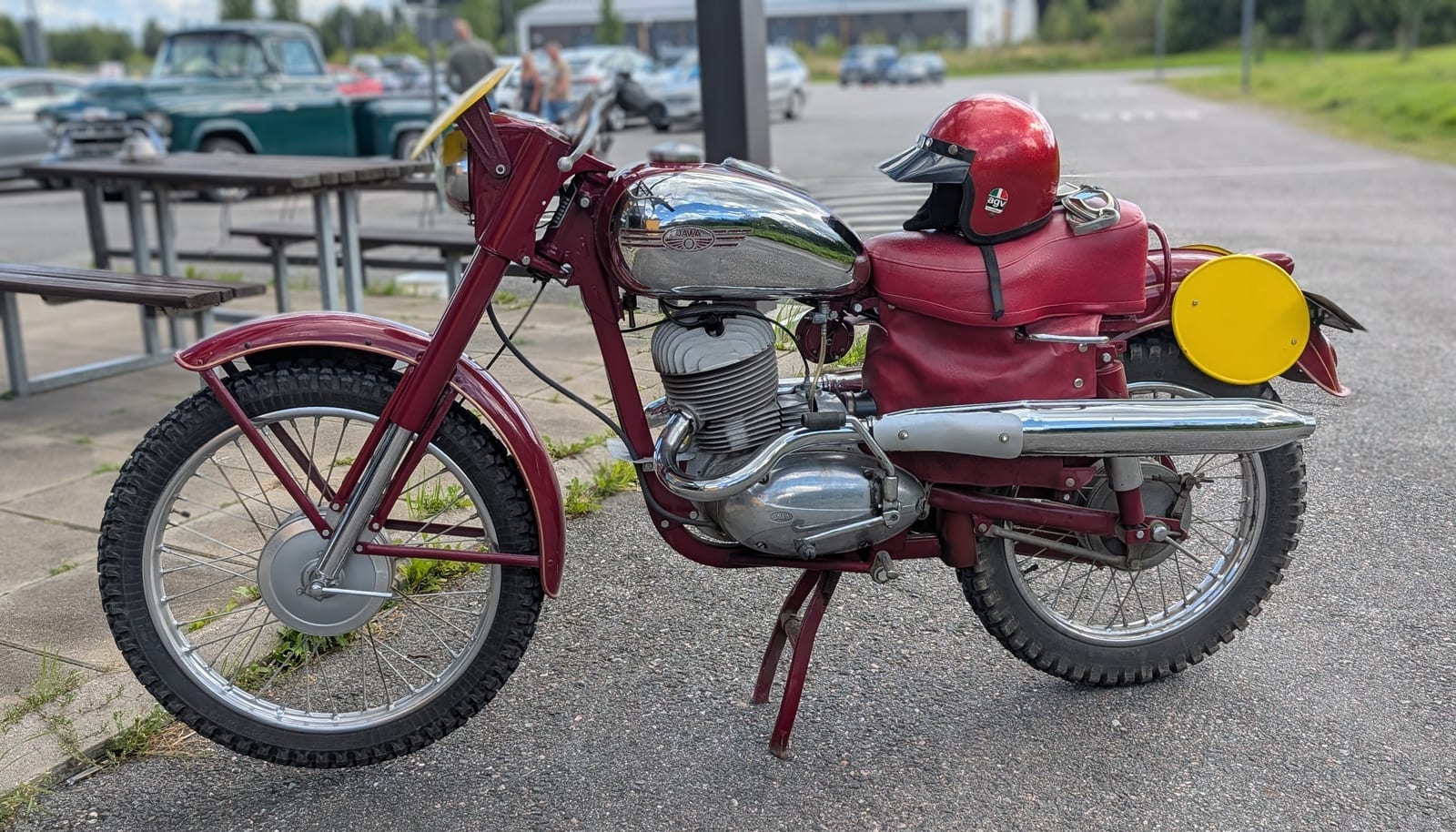
The birth of Jawa
After returning to his native Bohemia in 1906, František devoted himself to weapons development during the First World War and designed a hand grenade for the army. Later, in 1922, he established his own arms factory in his inn located in Prague, which was named Janečkárna.
Janeček expanded his operations to motorcycles in 1929 without any prior experience in the field. By choosing an engine from the German manufacturer Wanderer, he created the brand name Jawa from a combination of these names. Although the first red model was successful, it was too expensive for many.
In 1930, Jawa achieved its first victory in the international Six Days Trials competition. Following this, the affordable and durable Jawa 175, introduced to the market in 1932, was a huge sales success that defined the company’s future as a manufacturer of lightweight motorcycles.
When Nazi Germany occupied Czechoslovakia in 1939 and took over the factory, the development of motorcycles was not completely stopped, but continued in secret from the authorities.
Development of the Six Days model
Karel Janeček took over the management of the company after his father’s death in 1941. After the Second World War, Jawa was nationalized and merged with the manufacturer ČZ. A new and modern motorcycle model was successfully introduced in 1946, thanks to development work carried out in secret.
Jawa brought new 250cc and 350cc street vehicles to the market in 1953. Based on these, the Six Days models intended for off-road use were created, whose special features included larger rims, increased ground clearance, and a reinforced frame structure.
The Jawa 250 Six Days, which represented the pinnacle of its time, was an exceptional off-road machine, and the 250cc version in particular differed significantly from the corresponding street bike. The performance of this 140-kilogram, 17.5-horsepower bike was backed by a special piston, two spark plugs, a larger carburetor, and an aluminum cylinder with better flow characteristics.
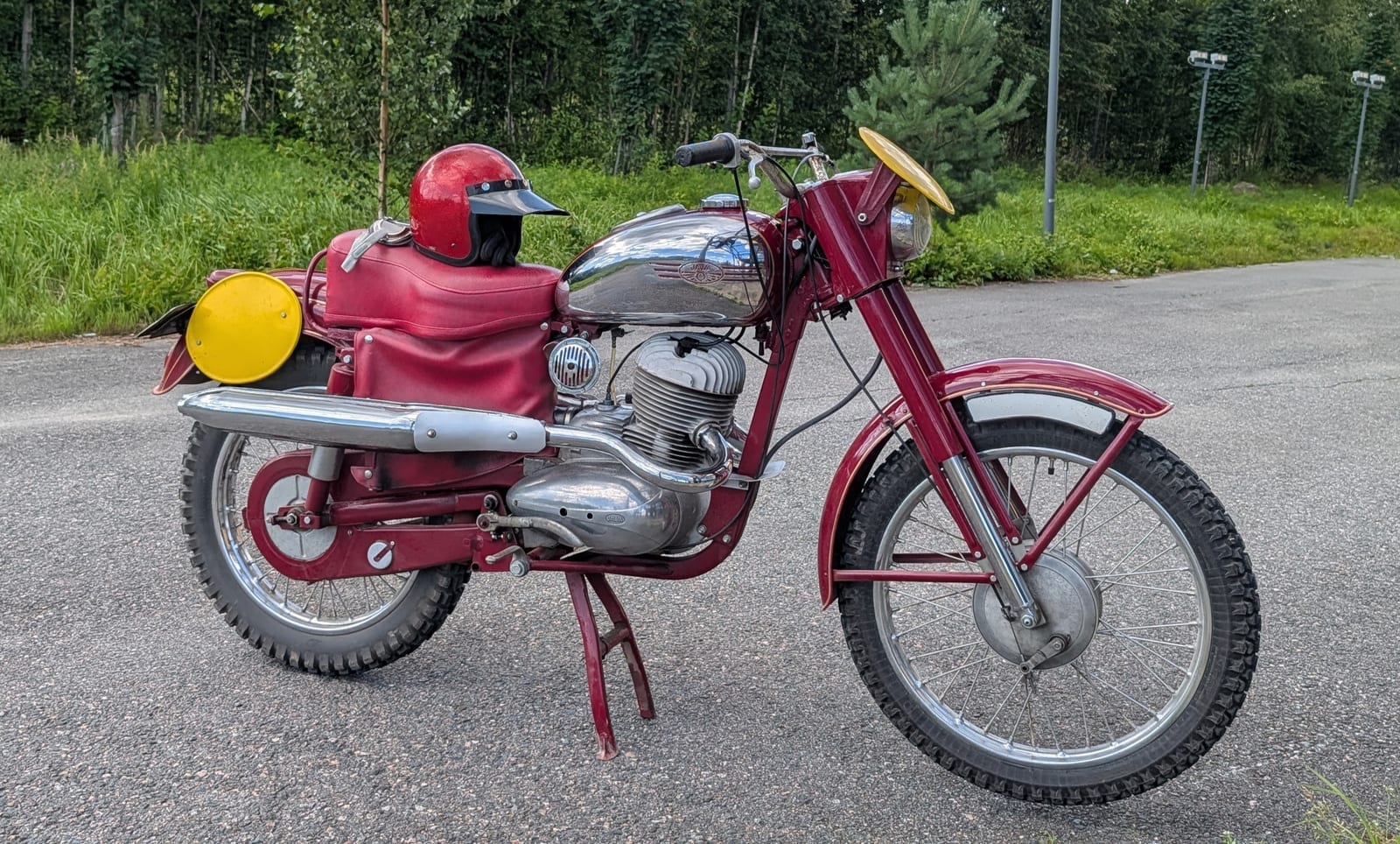
Development accelerates, until it stops
Honda still utilizes the automatic clutch patented by Jawa in 1959 in its models. The successor to the Six Days models, introduced in 1963, had a revolutionary frame and a 27-horsepower engine, and although the brand still succeeded on race tracks, the state-led planned economy began to hinder innovation. Because old models sold well in the Eastern Bloc’s internal markets, there was no pressure to put new inventions into production.
The Six Days models also achieved solid popularity in everyday use, such as among lumberjacks, which was influenced by a shortage of cars and poor road conditions. The bikes were also utilized in the service of the Finnish and Swedish defense forces, and the versions delivered were even equipped with skis. During its lifecycle, the model collected numerous victories in the international Six Days trials as well as in Finland’s most challenging reliability competition, the Päijänneajo.
After the collapse of the Soviet Union, it was revealed how far Jawa’s true level had fallen behind its Western competitors. Today, the brand’s position in the market is marginal, even though some general models can still be found in the collection. The achievements of the past golden ages are still preserved, and the original Jawa Six Days still lives on among enthusiasts.