Belgium’s unique position as the hub of international motocross has endured for more than half a century. In this article we explore the factors that created the “motocross stronghold.”
Belgium, a geographically small nation, has dominated international motocross in a way rarely seen in any sport. The country has produced 33 of the first 85 FIM World Championship titles, and some of the world’s leading motorcycle manufacturers have based their development centres on Belgian soil.
The Belgian dynasty: a statistical anomaly
Belgium’s status as the motocross mecca is not mere narrative — it is backed by raw statistics. By the early 1990s, Belgian riders had won roughly 40% of all World Championship titles awarded.
| Rider | Titles | Notes |
|---|---|---|
| Stefan Everts | 10 | The most successful GP rider of all time. |
| Joël Robert | 6 | Dominated the 250cc class; renowned for his natural talent. |
| Roger De Coster | 5 | ”The Man”; a central figure in the globalisation of the sport. |
| Georges Jobé | 5 | Known for his aggressive style and massive jumps. |
| Eric Geboers | 5 | ”The Kid”; the first triple-class champion. |
| Joël Smets | 5 | A pioneer of the modern four-stroke era. |
| Harry Everts | 4 | A cornerstone of Suzuki’s 125cc reign. |
The building blocks of a capital
Geographic centrality: Belgium sits at a strategic crossroads, with short distances to France, Germany, the Netherlands and Great Britain. This made logistically effortless participation in the GP series possible.
Density of infrastructure: At its peak Belgium boasted 60 tracks for a population of 11 million. This abundance spawned a thriving sub-economy: international races were held between GP weekends.
The sand of Flanders: The bottomless sand of the Flanders region — Lommel in particular — is one of the most physically and technically demanding surfaces in the world. Training in Lommel’s “bottomless sandbox” forged an endurance in riders that made conventional GP tracks feel relatively easy.
Heikki Mikkola — “The Flying Finn”
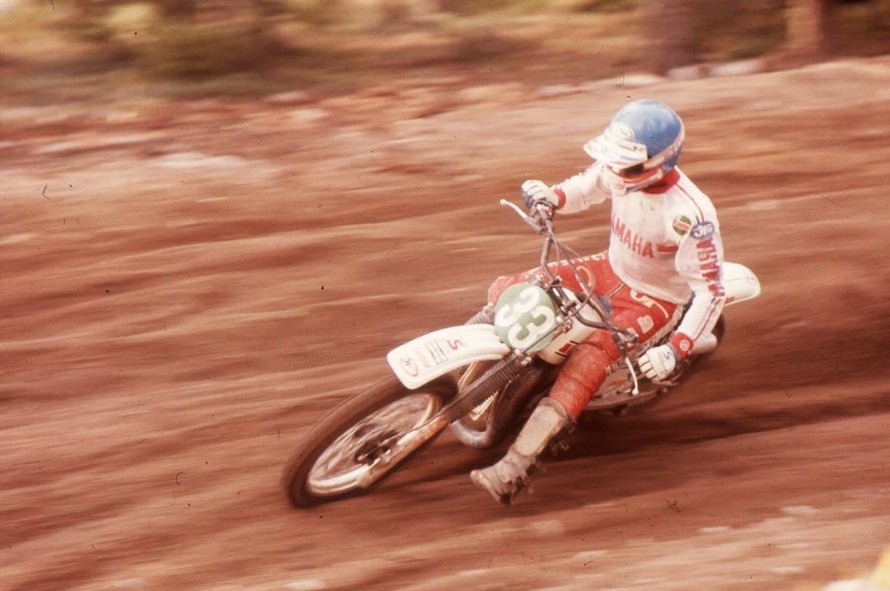
Heikki Mikkola’s career is a textbook example of how many foreign riders integrated into the Belgian ecosystem. Mikkola moved to Belgium in 1971 to eliminate the exhausting travel and gain access to the key training grounds.
His Finnish roots on the sandy tracks of Hyvinkää had prepared him perfectly for Belgian conditions. Mikkola was able to beat the technically superior Japanese factory machines on sheer physicality alone, especially during the final ten minutes of a race.
“The sand of Flanders is a topographic litmus test that separates champions from challengers.”
Technical innovation and the Japanese
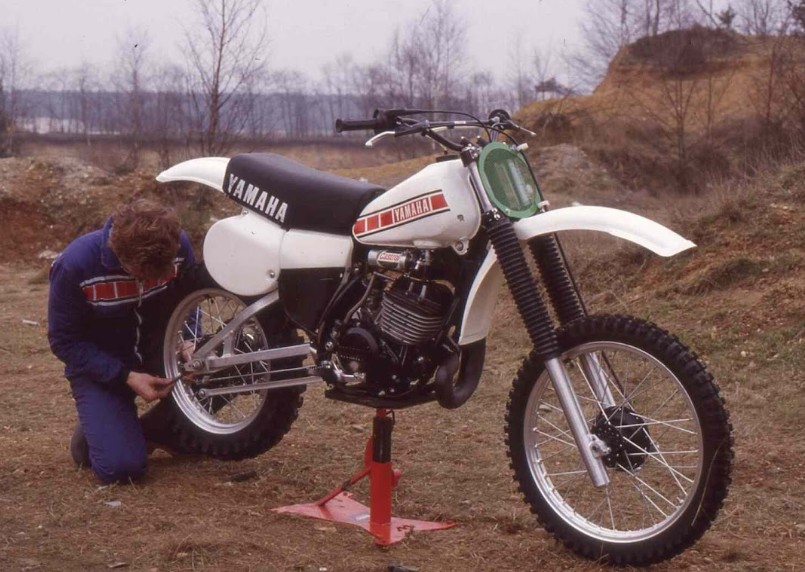
The world’s biggest motorcycle manufacturers established their strategic bases in Belgium: Suzuki (Lommel) developed prototypes directly at the Lommel track, and Honda (Aalst) relocated its HRC operations to the town in 1982. Yamaha leveraged Belgium’s track network to develop young talent.
Regulation and urban sprawl
Belgium’s motocross infrastructure has experienced a dramatic collapse since the 2000s. Residential development has encroached on formerly remote areas (the NIMBY phenomenon), and Flanders’ strict VLAREM environmental regulations have imposed near-impossible noise limits.
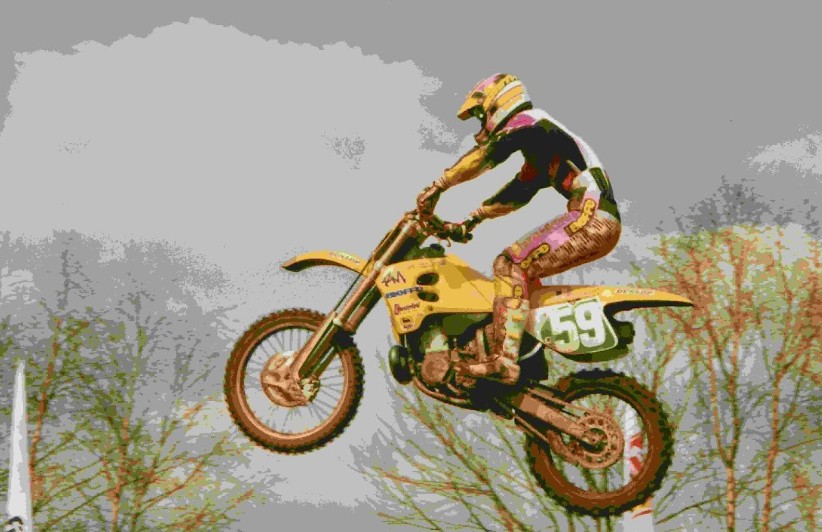
One of the most significant blows was the court-ordered closure of Honda Park (Olmen) under an EU habitats directive. After Stefan Everts’ retirement, mainstream media interest has also shifted to other sports.
Today the country stands as an example of how strict regulation and shifting societal values can bring down a historic institution. While the sands of Belgium remain the spiritual home of the sport, the once-thriving network has given way to a fight for survival.
Text: Photo & Moto / Source material