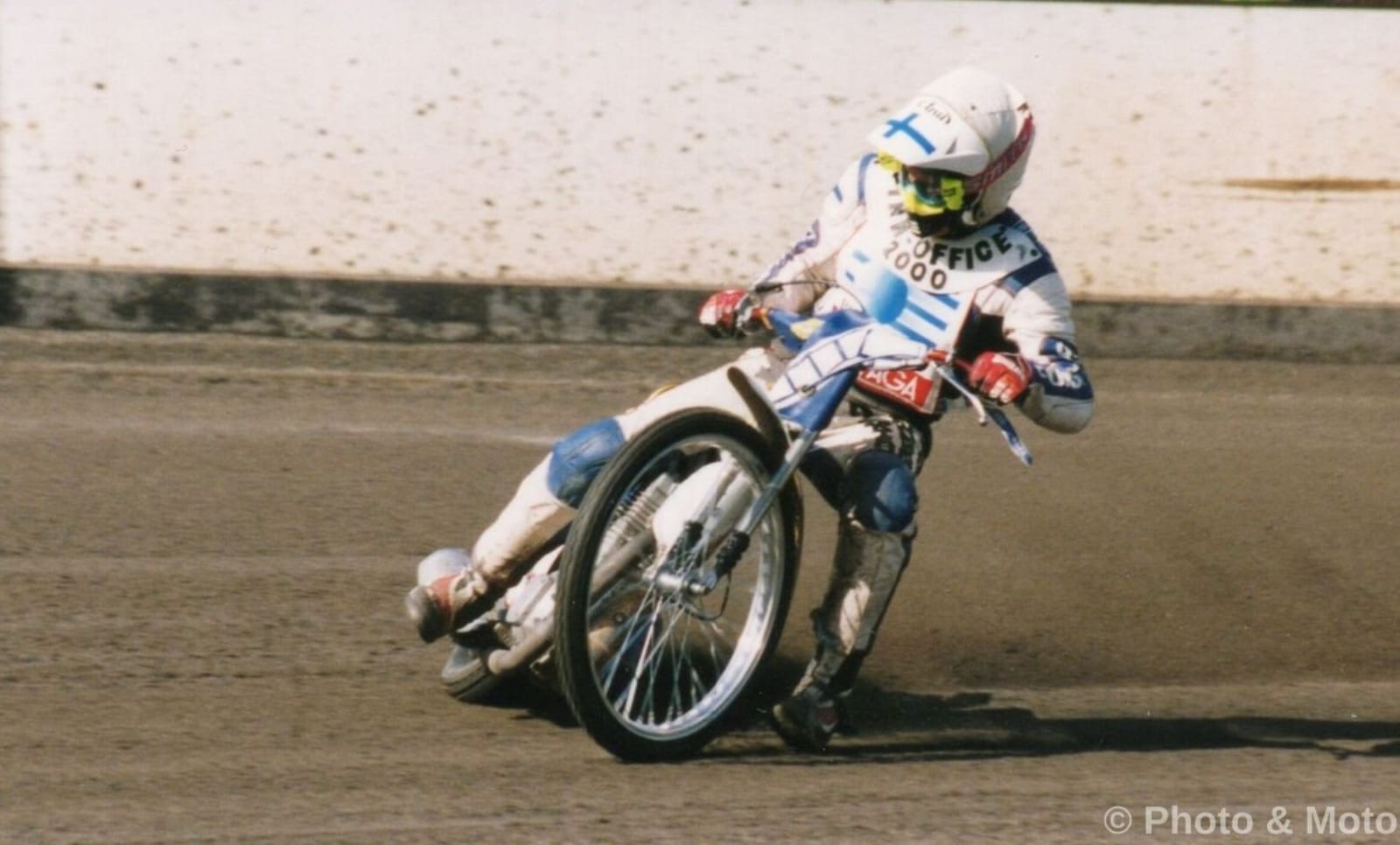
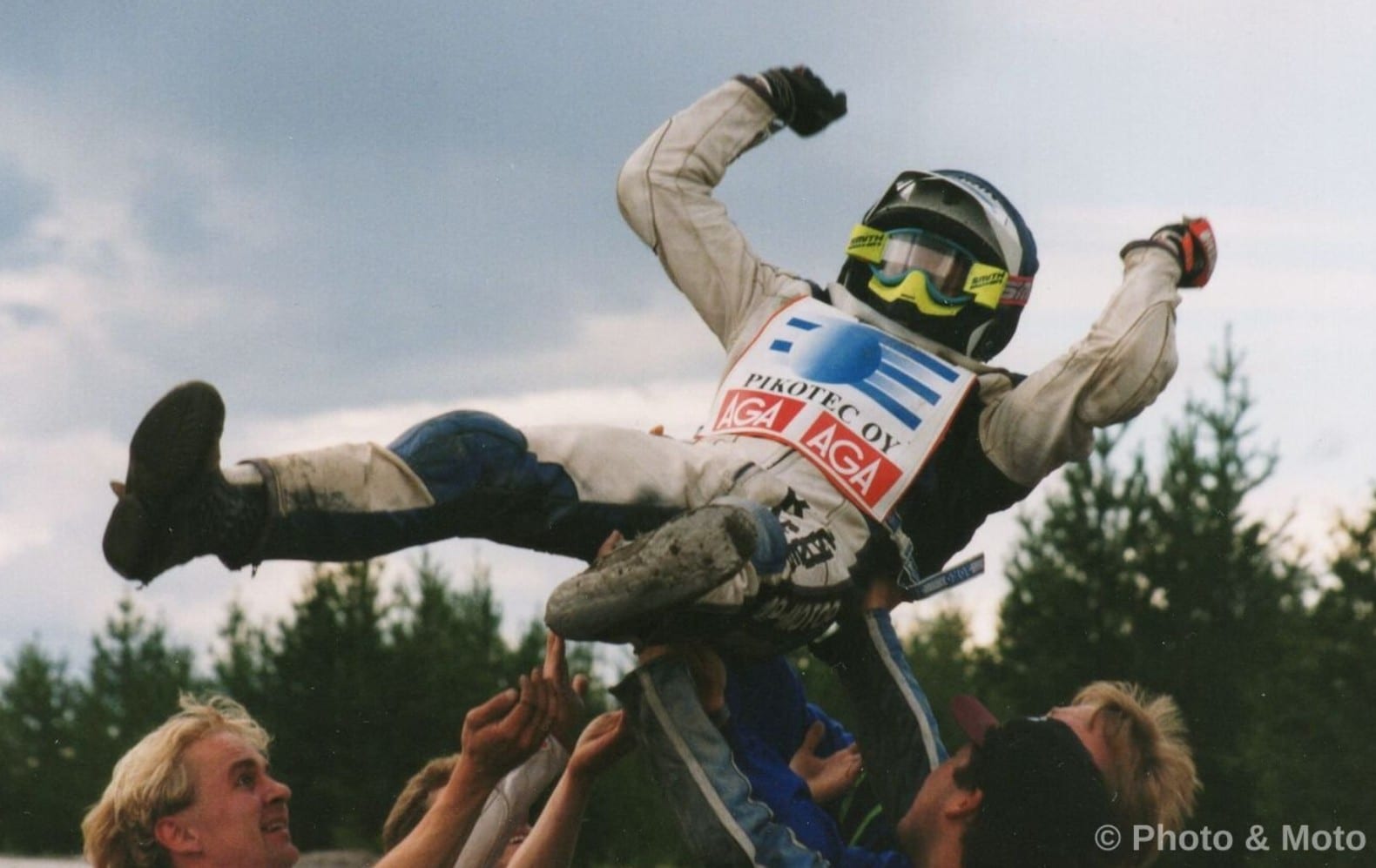
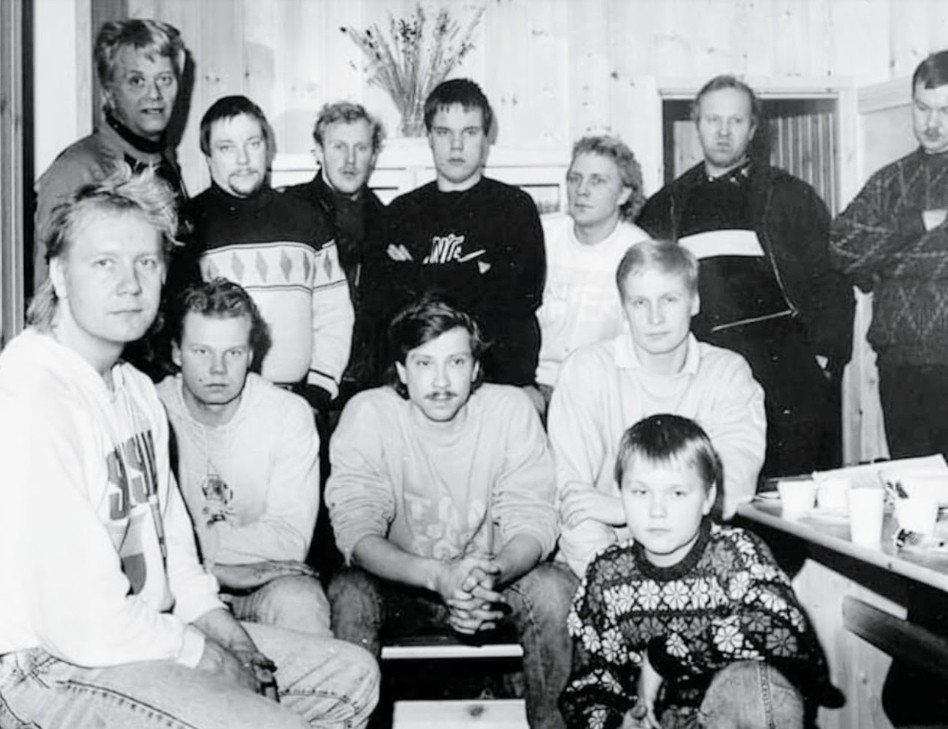
The year was 1986. Having heard the evening roll call in motocross, a group of friends were looking for new sources of excitement. The spark to move into speedway was ignited, and thus Sandblowers was born with the bold idea of bringing vibrant color to a “grey” sport. Literally speaking, their Jawas were painted in bright color shades, challenging traditions.
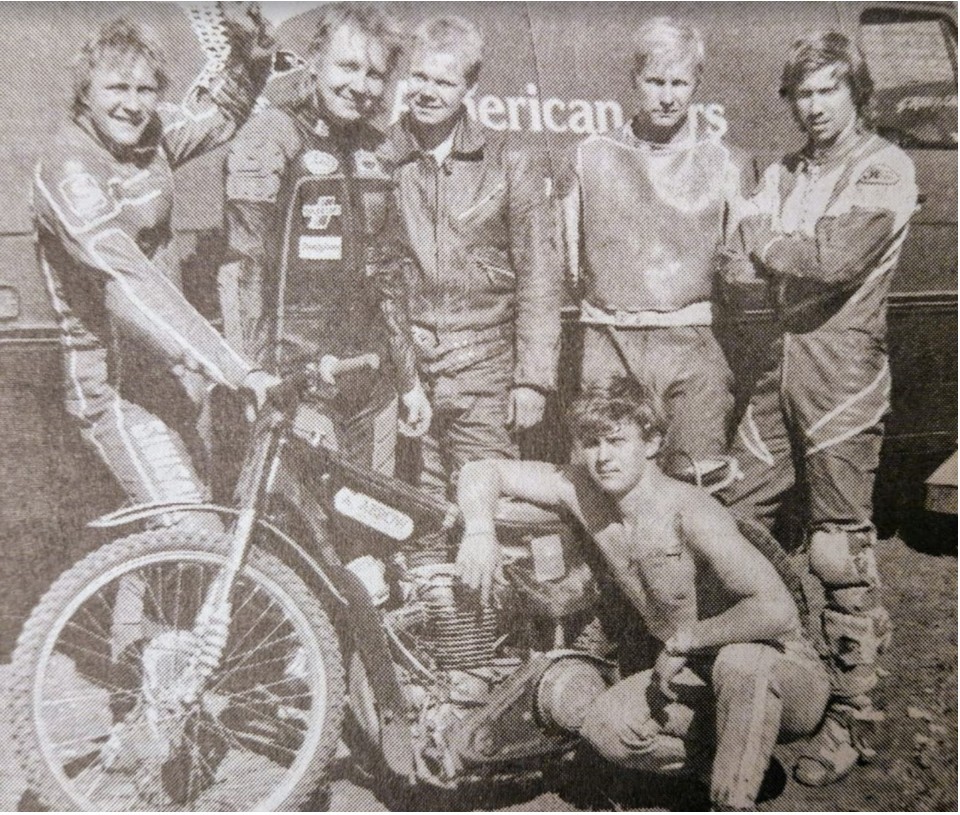
Sandblowers from the left: Sakke Ojala, Jerry Wathen, Mika Pellinen, Arto Vilkman and Kai Kujala. In front: Jyrki Hinkkuri
Their debut in Seinäjoki caused confusion. First of all, an English team name was unheard of, and when their kaleidoscopic bikes appeared from a van in the pits, the organizers were stunned: “You can’t ride with those colors! It’s against the rules!” After a short argument, Sandblowers got their way. After that, they dominated the competition, winning over the skeptical audience and beginning their legendary journey.
From outsiders to the top of the league
Sandblowers quickly became a much-talked-about team, known for their unique style and undeniable talent. In just two years, they rose rapidly to the top division of Finnish speedway.
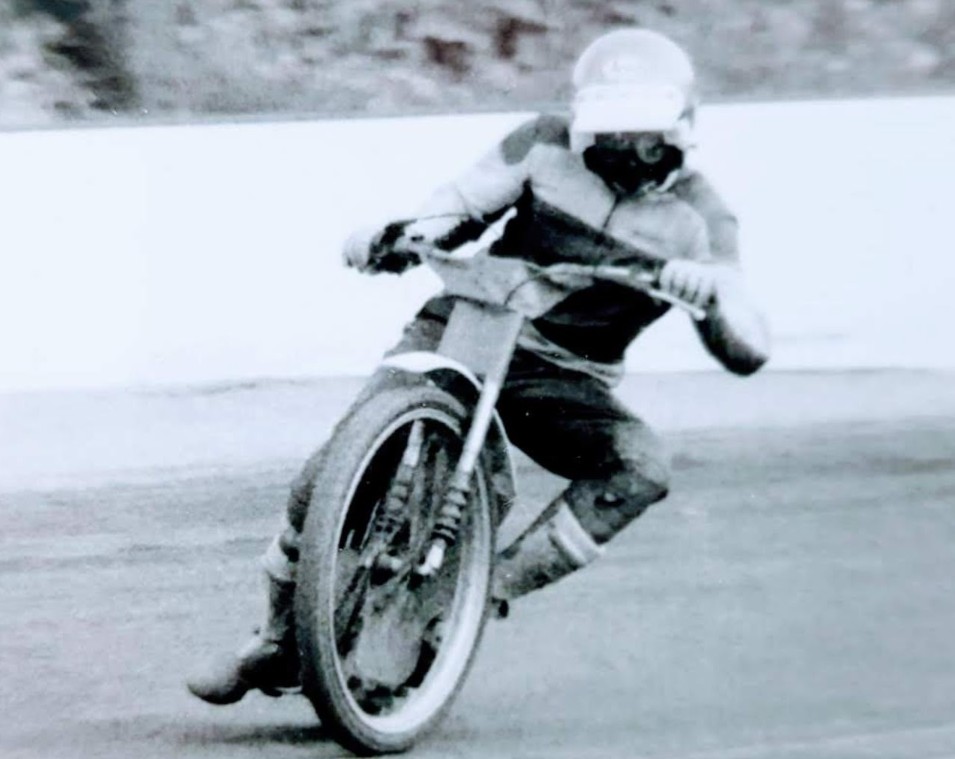
Sandblowers’ influence extended beyond the track. Their energy also ignited a spark in Jorma Virta, a respected motor enthusiast from Hyvinkää, known by the nickname Mr. Speedway. Jori became the team’s mentor, and under his guidance, Hyvinkää also reached an important milestone, as the city’s first-ever speedway stadium was completed.
The faded echo of a revolution
As in life in general, time moves on. Through various stages, the members of Sandblowers hung up their steel shoes. Although the Sandblowers name continued, changed members, a changed team spirit, and dynamics brought with them varying success. The special charm that had once defined the original sandblowers, as a team and as individuals so clearly, slowly faded. The revolutionary, brightly colored team that had shaken up Finnish speedway gradually faded into just one team among others.
Of the “Sandblowers” on a personal level, Mika Pellinen rose the highest, achieving Finnish Championship bronze in 1991 and a fine Finnish Championship gold in 1993. His upward career took him to Sweden in 1993 to the Dackarna team and from there on to England in 1994, where he first represented the Swindon Robins and later the Exeter Falcons. However, his soaring career ended abruptly due to a serious accident in Exeter, where his leg was badly crushed. This unfortunate event ended Mika’s eventful speedway career.